

The last mile of any delivery is the most revealing. It is the stretch where sophisticated algorithms meet unpredictable weather, where carefully optimized routes encounter construction detours and apartment complexes with no clear entrance. It is the point where the entire supply chain, from warehouse to sorting facility to dispatch, either delivers on its promise or falls short. And it is the place where the gap between systems designed for volume and systems designed for people becomes impossible to ignore.
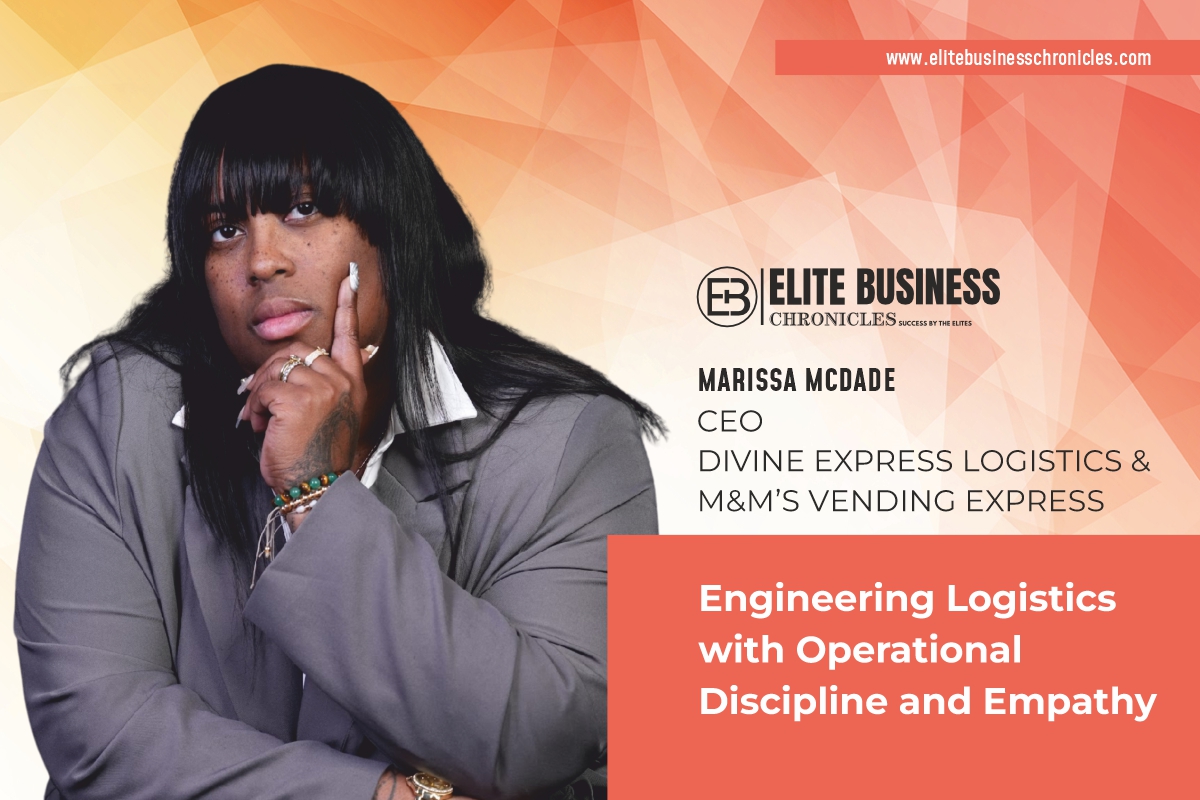
Marissa McDade has spent her career operating in that gap. As the CEO of Divine Express Logistics and M&M’S Vending Express, she brings a perspective shaped not by theory but by proximity. Her understanding of how packages move, how drivers experience the work, and how leadership either supports or undermines performance was not built in a strategy meeting or a graduate program. It was built on the sort floor.
From the Sort Floor to the Road
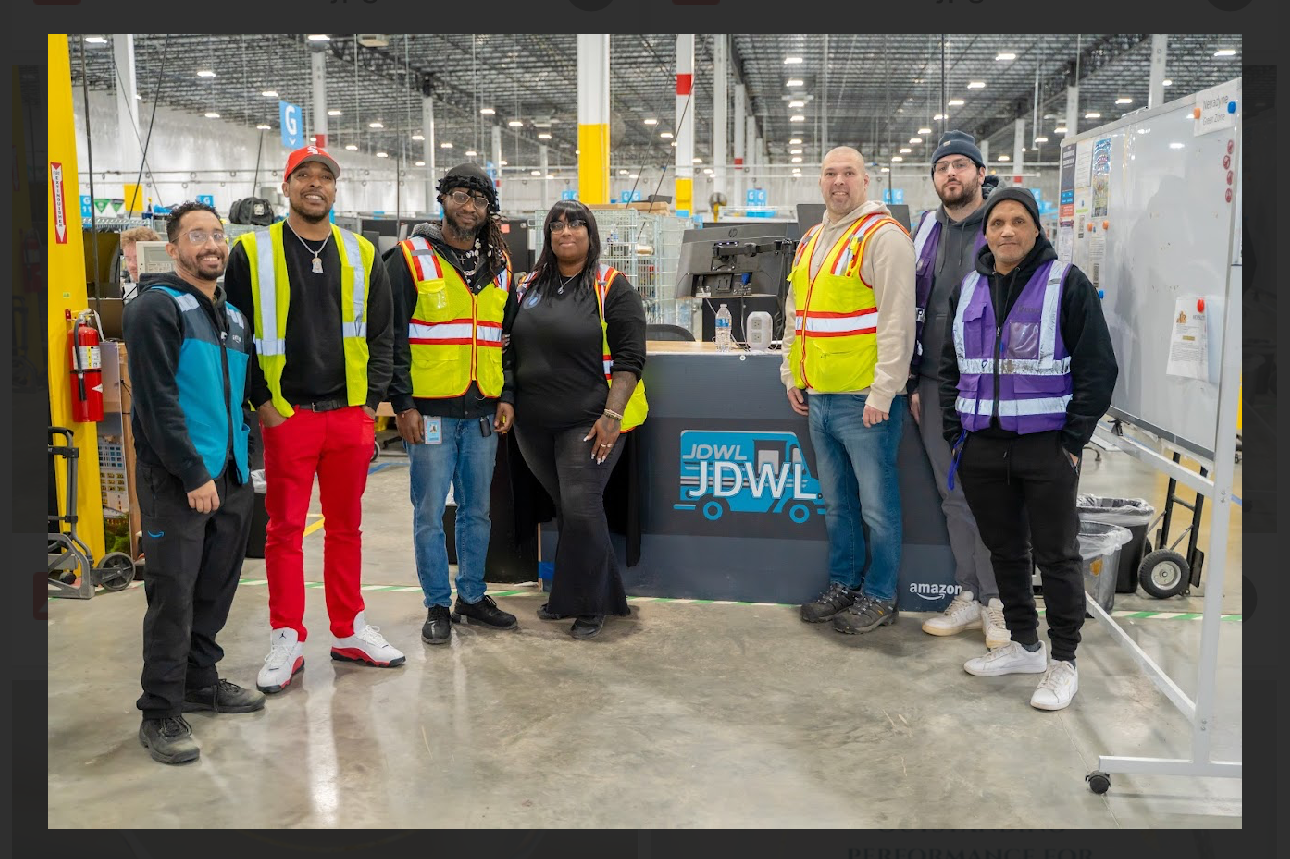
Eight years ago, Marissa started her logistics career on the sort floor at Amazon. That ground-level entry gave her a firsthand understanding of what she calls the “Dock-to-Door” package lifecycle: the full journey a package takes from arrival at the station dock to the moment it reaches a customer’s doorstep.
That understanding has become the foundation of her operational philosophy. Every stage of the cycle, from unloading trailers and sorting packages to dispatching routes and supporting drivers on the road, must function as a connected system rather than a series of isolated tasks.
In Marissa’s view, the operational decisions made inside a station directly impact drivers once they leave the lot. Delays in dispatch, inconsistent staging, or inefficient routing create unnecessary pressure for the people responsible for completing deliveries.
“Because I began on the sort floor, I design processes with both operational discipline and empathy,” Marissa says. “Efficient systems must not only move packages effectively. They must also support the people responsible for executing those processes every day.”
This dual lens, part engineer and part advocate, defines her approach to process design. She emphasizes structured auditing, operational checks, and performance trending as essential tools for sustaining quality at scale. Implementing a process, she notes, is only the first step.
Leaders must regularly validate that operations follow standard work and best practices that can be replicated day after day. Monitoring metrics across the full lifecycle allows her to confirm that improvements are sustainable rather than temporary gains.
Her perspective also extends to innovation. Marissa regularly gathers feedback from drivers because they experience the final stage of the package lifecycle firsthand. Drivers often identify challenges related to route sequencing, delivery locations, or dispatch readiness that may not be visible through data alone. When that feedback surfaces, it creates opportunities for operational refinement. She supports small pilot initiatives to test potential improvements before scaling them across the operation, combining data insights with frontline observation to drive continuous improvement.
Clarity Before Speed
Managing large, multi-site teams in a high-volume logistics environment demands more than operational efficiency. It requires clarity about purpose. Marissa starts by ensuring every team member understands the mission behind the metrics. Speed and efficiency matter, but the ultimate purpose of the work is delivering reliability for customers who depend on it.
Accountability, in her model, is reinforced through transparency. Performance metrics related to safety, delivery success, and operational productivity are reviewed regularly so that teams understand where they are succeeding and where improvements are needed. But motivation, she believes, comes from a different source.
“When people feel respected, supported, and valued, they are more motivated to perform at their best,” Marissa says.
That conviction shapes her approach to development. She conducts regular one-on-one coaching sessions where she reviews performance with individual team members, addresses challenges, and identifies opportunities for growth. During these conversations, she and her team members discuss not only current performance but also long-term goals and the areas where they want to develop. Marissa provides stretch assignments whenever possible, allowing associates to lead small projects, assist with operational planning, or support cross-functional initiatives. Training reinforces operational best practices, safety standards, and leadership behaviors, ensuring that team members are confident in their responsibilities.
Mentorship holds a particular significance for Marissa. Having started her own career on the sort floor, she understands how impactful it can be when someone invests in your development. She tries to provide that same support for associates who want to grow their careers, reinforcing operational best practices alongside leadership behaviors to prepare them for the demands of future roles.
Her leadership is also informed by personal experience. As a single mother of four who has balanced work, education, and entrepreneurship while advancing in her career, Marissa carries an understanding that many associates are managing responsibilities beyond the workplace. That perspective has shaped a leadership style that is both performance-driven and compassionate.
During disruptions, whether caused by severe weather, infrastructure challenges, or unexpected demand spikes, she prioritizes being present and accessible. Checking in with drivers before dispatch, acknowledging the challenges they may face on their routes, and reinforcing that their safety and success matter helps maintain trust and motivation during difficult operational moments.
Data, Judgment, and the Human Variable
In logistics operations, data provides the visibility needed to understand how a system is performing. Every metric, from delivery success rates to route completion times, offers insight into operational health. But Marissa draws a clear distinction between surface-level numbers and the root causes behind them.
If delivery completion rates decline, the issue might initially appear to be productivity-related. But deeper analysis, Marissa notes, may reveal factors such as route density, dispatch timing, traffic conditions, or delivery location challenges. By examining patterns within operational data, leaders can make informed adjustments: refining route assignments, adjusting staffing levels, or improving dispatch readiness.
Data also supports forecasting. Predictive insights allow operations teams to prepare for volume surges, seasonal demand changes, or operational disruptions before they impact service. The goal, in Marissa’s framing, is to move from reactive problem-solving to proactive planning so that the system absorbs pressure rather than passing it along to drivers and customers.
Yet for all the power of data and automation, Marissa maintains that logistics remains fundamentally human. Technology has improved speed, accuracy, and forecasting capabilities, and artificial intelligence helps process large volumes of information more efficiently than ever before. But drivers navigate real-world conditions, including traffic, weather, and customer interactions, that technology alone cannot fully manage.
The most effective operational model, in her view, combines technological precision with human judgment. Technology provides structure and insight, while people bring the adaptability, awareness, and decision-making that keeps operations running smoothly in conditions no algorithm fully anticipates.
This balance is anchored by a principle Marissa returns to often: customer obsession. “Every package moving through the network represents a promise to a customer,” she says. “That promise may represent an essential household item, a gift, or something someone urgently needs.”
When evaluating operational decisions, she considers the impact on both the customer experience and the drivers responsible for completing deliveries. Balancing those two priorities, she believes, ensures that high service standards are maintained without sacrificing driver safety or sustainability.
Building for What Comes Next
The logistics industry is evolving on multiple fronts, and Marissa is watching the transformation closely. Sustainability is becoming an increasingly important focus across logistics operations, and she points to the expansion of electric delivery vehicles as a significant step toward reducing emissions compared to traditional fleets. In dense urban environments, she notes that e-bike and walker delivery routes have proven particularly effective. These methods reduce environmental impact while navigating the congestion and limited parking that make traditional vehicles less efficient in cities. Route optimization technology further contributes by reducing unnecessary mileage while improving delivery outcomes.
As an operations leader, Marissa emphasizes that sustainability initiatives must be implemented in ways that support both operational effectiveness and driver safety. The conversation about environmental responsibility, in her view, cannot be separated from the conversation about the people executing those initiatives on the ground.
Over the next decade, she expects continued transformation driven by advancements in automation, predictive analytics, and delivery technology. Sustainability initiatives and alternative delivery models will reshape how last-mile operations function in cities around the world. But what excites her most about the future of logistics is the opportunity to build systems that are not only technologically advanced but also human-centered.
“My goal as a leader is to ensure that as the industry evolves, we continue building operations that prioritize safety, innovation, and the people who make the system work every day,” Marissa says.
It is a statement that captures the through-line of her career: from the sort floor to the road, from data to judgment, from systems that move packages to systems that support the people who deliver them. In an industry where speed is often treated as the ultimate measure of performance, Marissa offers a different standard. Technology will continue to evolve, but in Marissa Marissa’s view, the success of logistics operations will always depend on the human element at their center.