

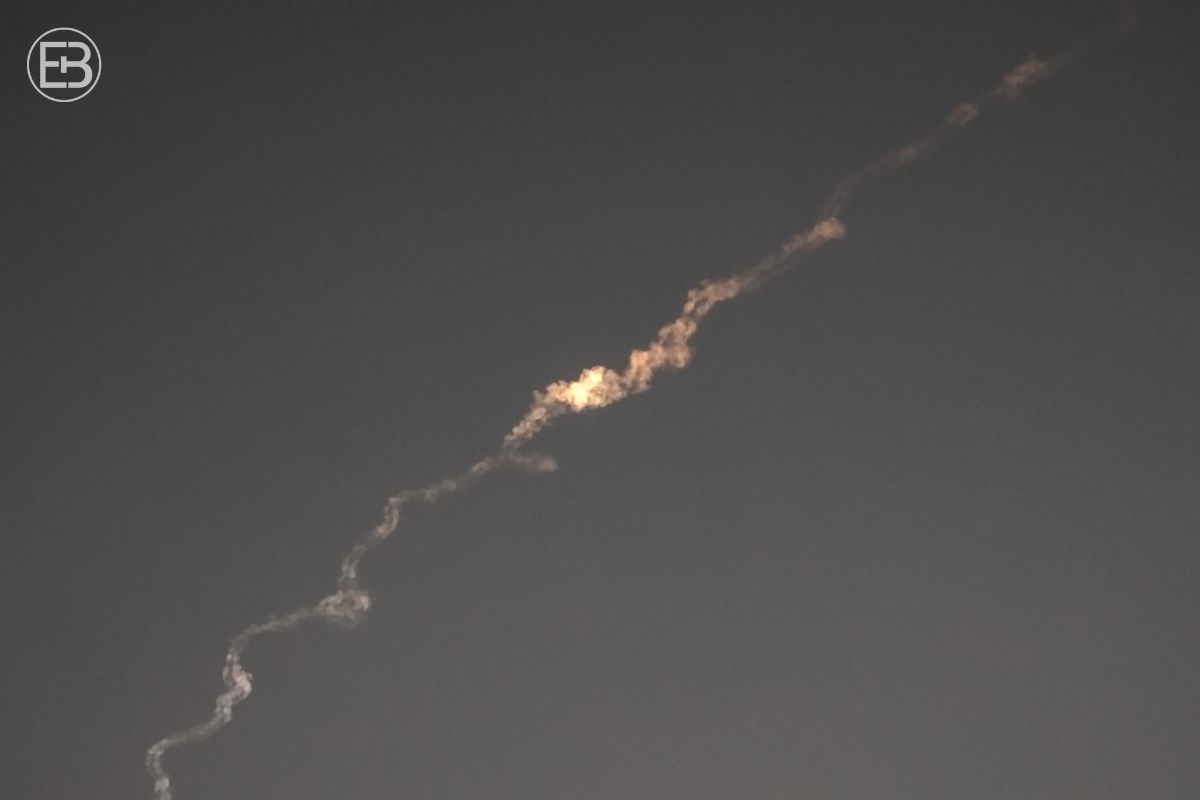
A spectacular meteor streaked across the skies of western Germany on Sunday evening, captivating observers and leaving a dramatic mark when a fragment punched through the roof of a home in Koblenz.
Authorities reported that the object struck a residence in the Güls district at around 7 p.m. local time. The impact created a hole roughly the size of a football in the roof, though fortunately no one inside the house was injured. Local police said the fragment appeared to be the charred remains of a celestial body that had survived its fiery descent through the atmosphere. Firefighters and emergency responders quickly secured the scene and confirmed that there was no ongoing danger to residents.
The event prompted a surge of calls to emergency services as people across large parts of western Germany reported witnessing the brilliant fireball. Sightings were recorded in several federal states, including Rhineland‑Palatinate, North Rhine‑Westphalia, Hesse, Saarland, Baden‑Württemberg, and Lower Saxony. Witnesses described seeing a bright, blazing object racing across the sky, followed moments later by a loud sonic boom. Reports of the spectacle also emerged from neighboring countries including Belgium, France, the Netherlands, and Switzerland.
Officials emphasized that the incident was purely a natural phenomenon and not linked to any security or military activity.
Scientists classify meteors as the bright streaks of light produced when meteoroids burn up while entering Earth’s atmosphere. If fragments survive the intense heat and reach the ground, they are then known as meteorites. According to experts from the European Space Agency’s Planetary Defense team, the fireball observed over Europe was likely a few meters in diameter before it broke apart during its descent. Observers reported that the glowing object remained visible for roughly six seconds and was loud enough to be heard from the ground.
Although such impacts are uncommon, they are not unheard of. In April 2023, meteorite fragments landed near Elmshorn in northern Germany, including a 3.7-kilogram rock believed to be the heaviest meteorite found in the country in about a century.
For comparison, one of the most famous modern meteor events occurred during the Chelyabinsk meteor explosion in 2013 in Chelyabinsk Oblast, Russia. That much larger object—estimated at about 18 meters in diameter—detonated roughly 30 kilometers above Earth’s surface. The explosion produced a powerful shockwave that shattered windows across the region and injured hundreds of people.
Researchers say Sunday’s meteor likely originated from debris shed by passing comets or asteroids. Such space rocks often disintegrate in the atmosphere due to intense heat and pressure, which appears to have happened in this case, with only small fragments reaching the ground. Investigators continue to study the event to better understand the object’s size, origin, and trajectory.